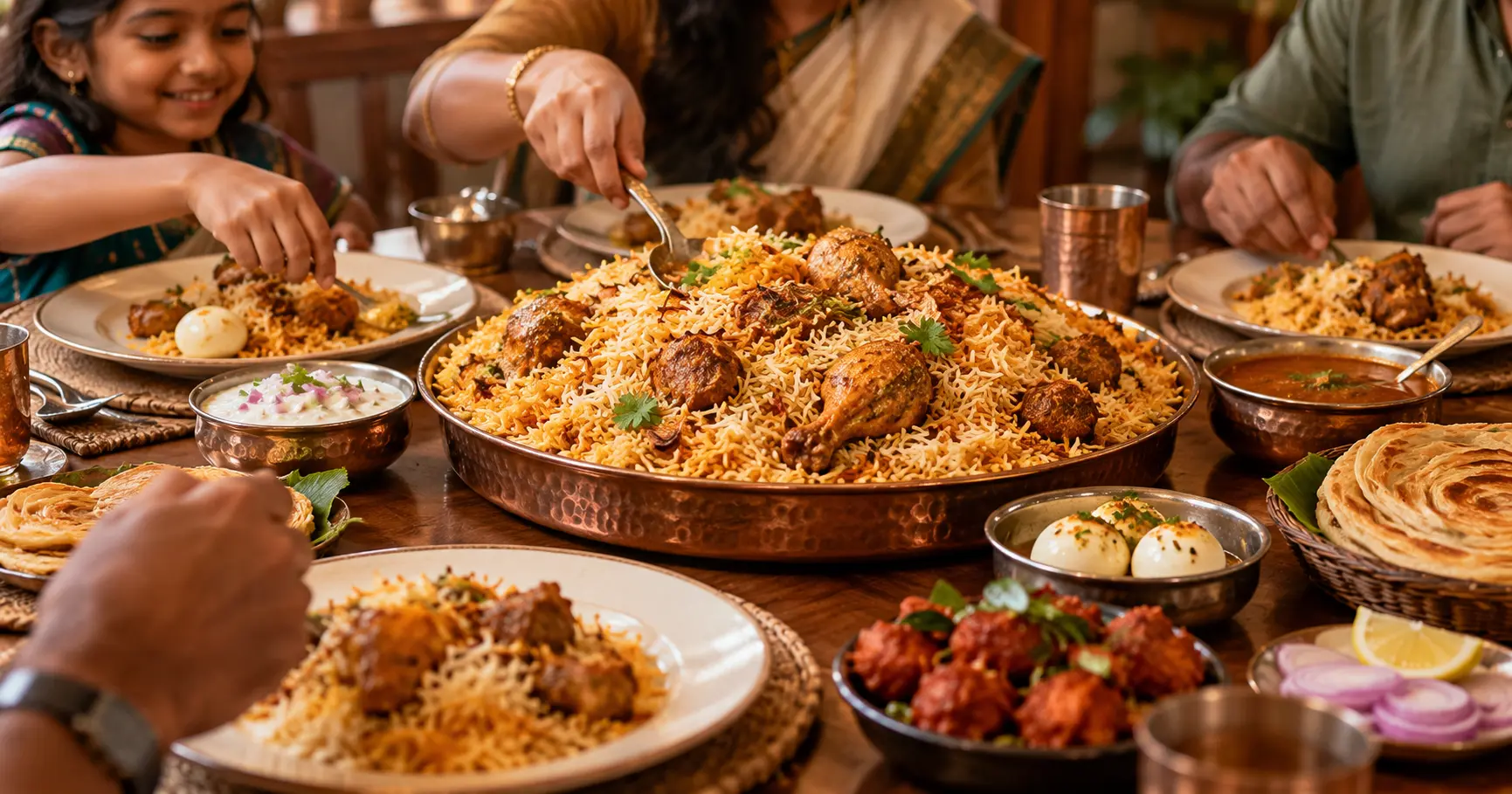
Ordering biryani for a family of 4 diners sounds simple until appetite, sides, children, and leftovers enter the calculation. Four adults sharing biryani as the whole meal need a different portion than two adults and two children eating it with appetizers. The smartest family order matches the serving size, protein, and sides to how the group eats.
In McKinney, families searching for family biryani are often choosing between individual portions and a family pack. The goal is not the biggest container; it is enough fragrant rice and tender meat for everyone without unnecessary excess.
Table of Contents
- How Much Biryani Family Should You Order?
- Chicken or Mutton: Which Suits Your Family?
- How Does Rice Choice Change Biryani?
- What Should You Add for a Balanced Family Meal?
- How Do I Find Family Biryani Near Me in McKinney?
- What Is a Practical Order for Four Versus Five Diners?
- Frequently Asked Questions
- Choosing the Family Order That Fits Your Table
How Much Biryani Family Should You Order?
An order of family biryani is typically a sensible place to start when the dinner includes an appetizer or side dish for four people. For five people, choose a pack specifically intended for four to five diners or add another substantial dish, particularly when the group is mostly adults with strong appetites.
Serving size is not only about headcounts. Consider whether biryani is the only main dish, whether children are eating, and whether you want leftovers. Sides such as Chicken 65 or parotta can reduce how much biryani each person needs.
Salem RR Biryani in McKinney currently lists weekend feast packages specifically structured for 4 to 5 people, with veg, chicken, and mutton family-pack biryani options. That provides a useful local benchmark because the format is designed around a real group size rather than several individual containers.
Chicken or Mutton: Which Suits Your Family?
Chicken biryani is often the more flexible option for a mixed family group, while mutton biryani works well for diners who prefer a richer, more meat-forward meal.
Tender chicken absorbs the biryani masala while remaining relatively light beside seasoned rice. If you are ordering chicken biryani for 4 or 5 people, it can work especially well when children or first-time biryani diners are at the table.
Mutton Biryani has a deeper character. Slow-cooked goat meat contributes savory juices to fragrant rice, creating a fuller flavor. A mutton biryani family pack may be especially appealing for a relaxed weekend dinner, family gathering, or small celebration.
There is another practical difference: chicken can be easier for groups with varied preferences, while mutton is worth choosing when most people at the table already enjoy goat meat.
How Does Rice Choice Change Biryani?
Rice is not simply a background ingredient in biryani. The variety of rice can change the aroma, texture, and way the spices are experienced.
Long-grain basmati generally creates a lighter appearance with elongated, more separated grains. Because Seeraga Samba rice is aromatic and shorter, animal juices and seasonings can remain deeply ingrained in the grain.
That means two biryanis made with comparable biryani spices can still feel quite different.
Salem RR menu highlights Salem RR Special Chicken Biryani with basmati and also lists Seeraga Samba-style choices. Its published 4–5 person mutton feast features Seeraga Samba Mutton Biryani.
Families that enjoy fluffy, visibly separated grains may lean toward basmati. Diners looking for a compact rice texture with more integrated spice and meat flavor may prefer Seeraga Samba.
That rice distinction is something first-time family orders often overlook.
What Should You Add for a Balanced Family Meal?
Biryani already combines rice, protein, herbs, biryani masala, and aromatic spices. Instead of adding another heavy main dish automatically, think about contrast.
Chicken 65 can contribute to a crisp exterior, tender center, and chili-forward seasoning. Parotta brings a soft, flaky bread texture, while salna provides a savory gravy that can be shared separately.
A cooling yogurt-based accompaniment can also help balance a strongly seasoned biryani and refresh the palate between bites.
For a family dinner, one family biryani pack plus one or two contrasting sides can be easier to share than several unrelated entrées. Lighter eaters can build smaller plates, while hungrier family members can return for seconds.
This approach also works well for a South Indian family meal where sharing several textures is part of the dining experience.
How Do I Find Family Biryani Near Me in McKinney?
When looking at family biryani near McKinney, look beyond which restaurant is closest.
Check whether the menu clearly identifies:
- Family-size or group servings
- Chicken, mutton, and vegetarian choices
- Rice styles
- Shareable appetizers
- Takeout, pickup, or delivery options
- Order-ahead availability
currently offers dine-in, takeout, delivery, and group-oriented ordering, while its published weekend family feast provides a specific 4 to 5 person format.
For someone looking for a family restaurant near McKinney option, those details can be more useful than simply choosing the restaurant with the shortest drive.
What Is a Practical Order for Four Versus Five Diners?
For four diners, start with one family pack when biryani is the centerpiece and add an appetizer or bread-based side.
For five diners, a pack specifically designed for four to five people provides a clearer baseline. Add another shared item when everyone is an adult; the group has larger appetites, or generous second servings are expected.
A simple guide is:
- Four mixed appetites: Family biryani + one side
- Four hungry adults: Family biryani + substantial appetizer
- Five mixed appetites: 4–5 person family pack + one side
- Five hungry adults: Family pack + one or two substantial additions
- Mixed preferences: Split the order between chicken and mutton when suitable portion sizes are available
The useful principle is to size the whole meal, not just the rice container.
Frequently Asked Questions
How much biryani do I need for 4 people?
For four people, a family-size biryani is a practical starting point, especially with an appetizer, parotta, salna, or another side. Four adults with large appetites may need more than a group containing children. If biryani is the only substantial dish, choose a generous family serving rather than assuming every diner will eat the same portion.
How much biryani do I need for 5 people?
For five people, choose a family biryani pack or feast intended for four to five diners whenever possible. If all five are adults and biryani is the only substantial dish, add a starter or another shared item. If the group includes children or lighter eaters, the same family serving with one side may be sufficient.
What is the best biryani for a family dinner?
The right choice depends on your group. Chicken biryani is approachable for mixed-age tables, while mutton biryani offers a richer, meatier profile. Rice matters too: basmati tends to feel lighter and more separated, while Seeraga Samba carries seasoning more closely.
How many people does a family-size biryani serve?
There is no universal serving number because restaurant containers and recipes differ. Use the restaurant’s stated serving range first and then adjust for appetite and sides. A pack specifically intended for four to five people is the most reliable starting point for that group size.
Is chicken or mutton biryani better for a family dinner?
Chicken biryani is often easier for mixed groups because the meat is familiar, tender, and comparatively lighter. Mutton biryani brings a deeper, richer flavor and can feel more substantial.
Choosing the Family Order That Fits Your Table
A successful family biryani order is less about maximizing quantity and more about matching the meal to the people eating it.
For McKinney families, that means considering appetite, rice style, protein preference, sides, and whether dinner is a quick pick up meal, delivery order, or longer weekend gathering.
Chicken offers broad appeal; mutton brings deeper richness, and Seeraga Samba and basmati create noticeably different rice experiences. A well-chosen appetizer or side can also make a family serving easier to share.
For diners looking for an Indian family dinner in McKinney, understanding those differences makes it easier to order enough food for four or five people while giving everyone at the table something they genuinely want to eat.
