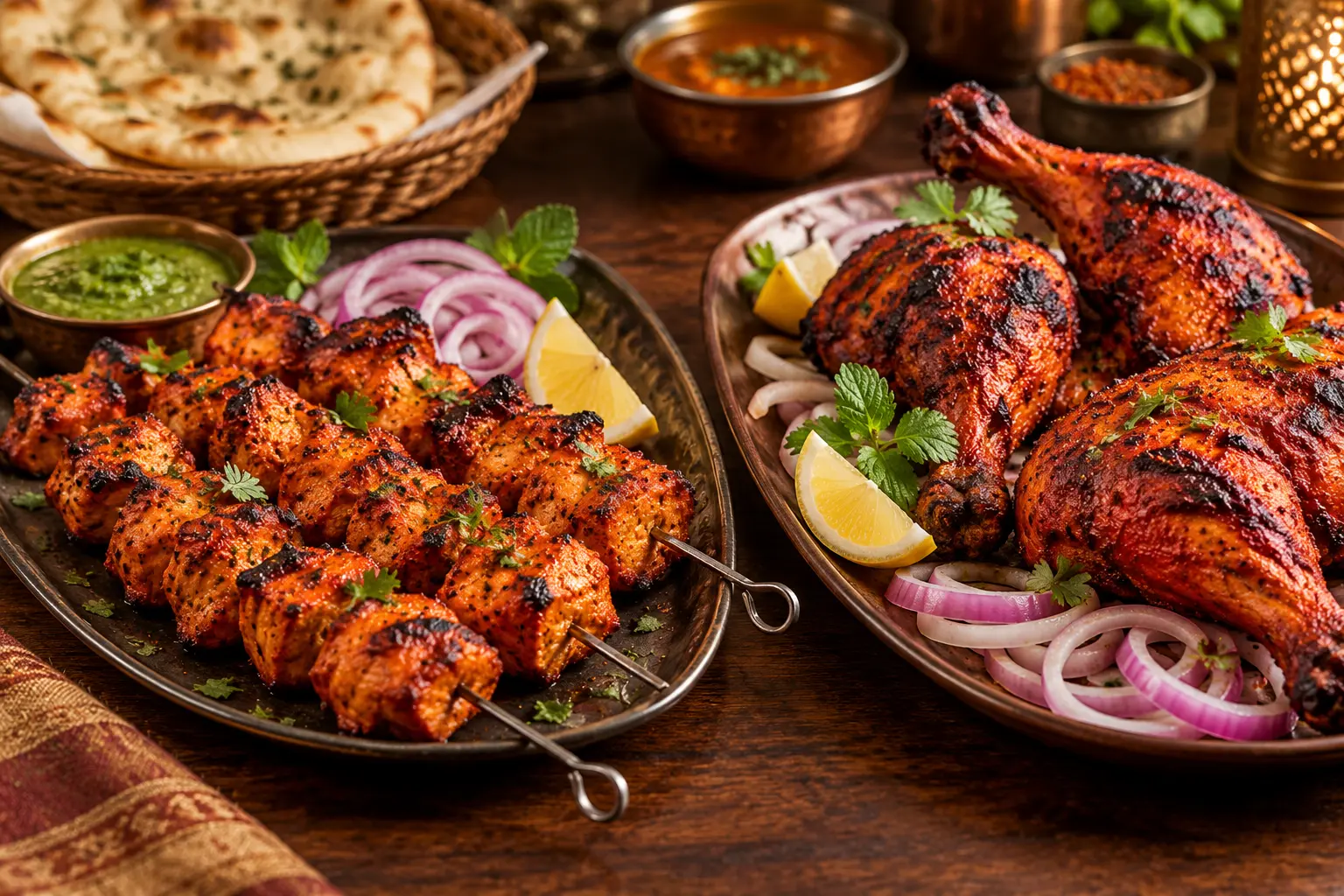
Chicken tikka and tandoori chicken can arrive at the table with similar smoky aromas, charred edges, and warm Indian spices, yet they are not the same dish. For diners comparing chicken tikka vs tandoori chicken, the biggest differences come down to the cut of chicken, how it is served, the amount of surface exposed to the marinade, and the overall eating experience.
Understanding those differences makes ordering easier, especially when you want Indian grilled chicken but are deciding between bite-sized boneless pieces and a larger, often bone-in preparation.
Table of Contents
- Chicken Tikka vs Tandoori Chicken: The Quick Difference
- What Makes Chicken Tikka Different from Tandoori Chicken?
- Are Chicken Tikka and Tandoori Chicken Cooked the Same Way?
- Why Does the Cut of Chicken Change the Flavor?
- What Is the Difference Between Tikka and Kebab?
- Which Indian Grilled Chicken Should You Order?
- What Should You Order with Chicken Tikka?
- Frequently Asked Questions
Chicken Tikka vs Tandoori Chicken: The Quick Difference
Looking for chicken tikka vs tandoori chicken is usually not about finding which dish is universally better. Diners are trying to understand what they will receive.
Chicken tikka generally consists of boneless, bite-sized chicken pieces marinated with yogurt and spices, then cooked at high heat, often on skewers. Tandoori chicken generally uses larger chicken portions, frequently bone-in, which are marinated and roasted in a tandoor.
That difference affects texture, char, juiciness, presentation, and even how easily the dish can be shared.
| Chicken Tikka Kebab | Tandoori Chicken |
| Usually boneless | Often bone-in |
| Cut into smaller pieces | Uses larger chicken portions |
| Frequently cooked on skewers | Roasted directly in a tandoor |
| More browned surface per bite | Juicier meat around the bone |
| Easy to share | More substantial individual portions |
| Convenient with rice and naan | Works as an appetizer or larger dish |
Both belong to the broader tradition of high-heat Indian grilling, but the eating experience is noticeably different.
What Makes Chicken Tikka Different from Tandoori Chicken?
Chicken tikka is generally made from boneless chicken cut into smaller pieces, while tandoori chicken typically uses larger portions that may include the bone. Both can use yogurt-and-spice marinades and high-heat tandoor cooking, but tikka provides more seasoned, charred surface area while tandoori chicken offers a meatier, juicier bite.
The word tikka refers to pieces or chunks, why try chicken appetizers as small portions rather than a whole leg or quarter.
Those smaller chicken cubes also create more edges. When exposed to intense heat, those edges can brown and lightly char, producing roasted spice flavors on several sides of each piece.
Tandoori chicken behaves differently. Larger sections of meat take longer to cook, and bone-in portions tend to retain moisture differently. You may notice stronger roasted flavors on the exterior followed by softer, juicier meat toward the center.
Are Chicken Tikka and Tandoori Chicken Cooked the Same Way?
They can use the same basic tandoor cooking principle, but their preparation is not identical. Chicken tikka is commonly skewered in smaller boneless pieces, while tandoori chicken uses larger portions. Both are typically marinated before being exposed to intense heat, producing browned edges, concentrated spices, and a lightly smoky character.
A traditional tandoor is a cylindrical clay oven capable of cooking food with intense radiant heat.
Marinade also matters. Yogurt is commonly paired with ingredients such as ginger, garlic and Indian spices. Beyond adding flavor, marination helps season the surface of the chicken before it encounters the heat of the oven.
Because the pieces of chicken tikka are smaller, more of the meat surface may be covered by the marinade. Tandoori chicken has less surface area relative to its size, but the longer eating path from roasted exterior to moist center produces a different contrast.
Why Does the Cut of Chicken Change the Flavor?
Cut size influences far more than presentation.
Imagine the seasoning on a small cube of boneless chicken tikka. Nearly every bite contains an exterior that directly touches the marinade and intense heat. The result can be smoky, tangy, savory, and lightly charred at once.
With a larger piece of Indian tandoori chicken, the flavor changes as you move inward. The outside delivers concentrated spice and roasting, while the center offers a softer chicken flavor and juicier texture.
This creates two different advantages:
Choose chicken tikka when: you like well-seasoned edges, boneless meat, and easy-to-share portions.
Choose tandoori chicken when: you prefer larger, substantial pieces and the contrast between roasted exterior and tender interior.
Neither preparation needs to be extremely spicy. Spice level and seasoning recipes can vary between kitchens; tandoori cooking itself refers more to the cooking technique than to a fixed level of chili heat.
What Is the Difference Between Tikka and Kebab?
Tikka describes pieces of food, while kebab is a broader category of seasoned meat or other ingredients prepared using grilling or roasting techniques. Chicken tikka can therefore be served as a type of kebab, particularly when marinated chicken pieces are threaded onto skewers and grilled.
This distinction explains menu names such as Chicken Tikka Kebab.
Not every kebab is tikka. Kebabs can differ significantly in shape, ingredients, and preparation. Some use pieces of meat, while others can use minced or ground mixtures formed around skewers.
For first-time diners, the useful takeaway is simple: when a menu says chicken tikka kebab, expect individual seasoned chicken pieces rather than a large bone-in chicken portion.
Which Indian Grilled Chicken Should You Order?
Your choice depends more on how you like to eat than on which dish is supposedly superior.
For someone trying Indian grilled food for the first time, chicken tikka is approachable because it is boneless and already portioned into manageable pieces. It is also easy for two or more people to share.
Tandoori chicken suits diners who enjoy bone-in roasted chicken and want the contrast of charred seasoning and juicy meat. It can work particularly well when the table already includes rice, curry, or bread.
For families, a combination can be more useful than choosing one over the other. Order chicken tikka for easy sharing while adding tandoori chicken McKinney people who prefer larger portions.
Office lunches and group meals can lean toward chicken tikka because the bite-sized pieces require less handling. A relaxed weekend meal, on the other hand, may be a good occasion to order a broader tandoori spread and compare different preparations.
What Should You Order with Chicken Tikka?
Chicken tikka works particularly well when paired with something that changes either the texture or moisture of the meal.
Naan or another Indian bread can soften the intensity of grilled spices and make each piece more filling. Biryani adds fragrant rice and deeper spice layers, turning a starter-sized tikka order into part of a larger dinner.
Cooling accompaniments such as raita can create contrast if your chicken is strongly seasoned. Lemon can brighten roasted flavors, while sliced onions or herbs add freshness.
If you are ordering for several people, one useful combination is:
- Chicken Tikka Kebab for sharing
- Biryani as the rice centerpiece
- Naan or another bread
- Raita or a cooling side
- One contrasting curry or vegetable dish
This creates variety without ordering several dishes that all provide the same texture.
Frequently Asked Questions
Which is better, chicken tikka or tandoori chicken?
Neither is automatically better. Chicken tikka is usually the easier choice for diners who prefer boneless, bite-sized chicken with plenty of seasoned exterior. Tandoori chicken is better suited to people who enjoy larger, often bone-in pieces with a roasted outside and juicy center. Your preferred texture and portion style should guide the decision.
Where can I get tandoori chicken in McKinney?
Indian restaurants with dedicated tandoori sections are the most relevant places to check when looking for tandoori chicken near McKinney. Salem RR Biryani’s current McKinney menu lists Tandoori Chicken as well as Chicken Tikka Kebab and other tandoori dishes, giving diners several high-heat grilled preparations to compare.
Is tandoori chicken an appetizer or a main dish?
Tandoori chicken can function either, depending on portion size and how the meal is structured. Smaller portions can be shared as a starter, while larger portions paired with naan, biryani, vegetables, or another side can become the main part of a meal. For family dining, it is also commonly treated as a shareable dish.
Are chicken tikka and tandoori chicken very spicy?
Not necessarily. Both dishes use aromatic spice marinades, but “spiced” does not always mean extremely hot. Yogurt, ginger, garlic, and other seasonings contribute to flavor as much as chili does. Recipes vary by restaurant, so diners sensitive to heat should ask about the kitchen preparation rather than assuming every tandoori dish is intensely spicy.
Which Indian grilled chicken should I order for a group?
Chicken tikka is particularly convenient for groups because boneless, bite-sized pieces can be divided easily. For more variety, combine chicken tikka with tandoori chicken so guests can compare a skewer-style boneless preparation with larger roasted chicken portions. Adding biryani, naan, and a cooling side creates a balanced shared meal.