
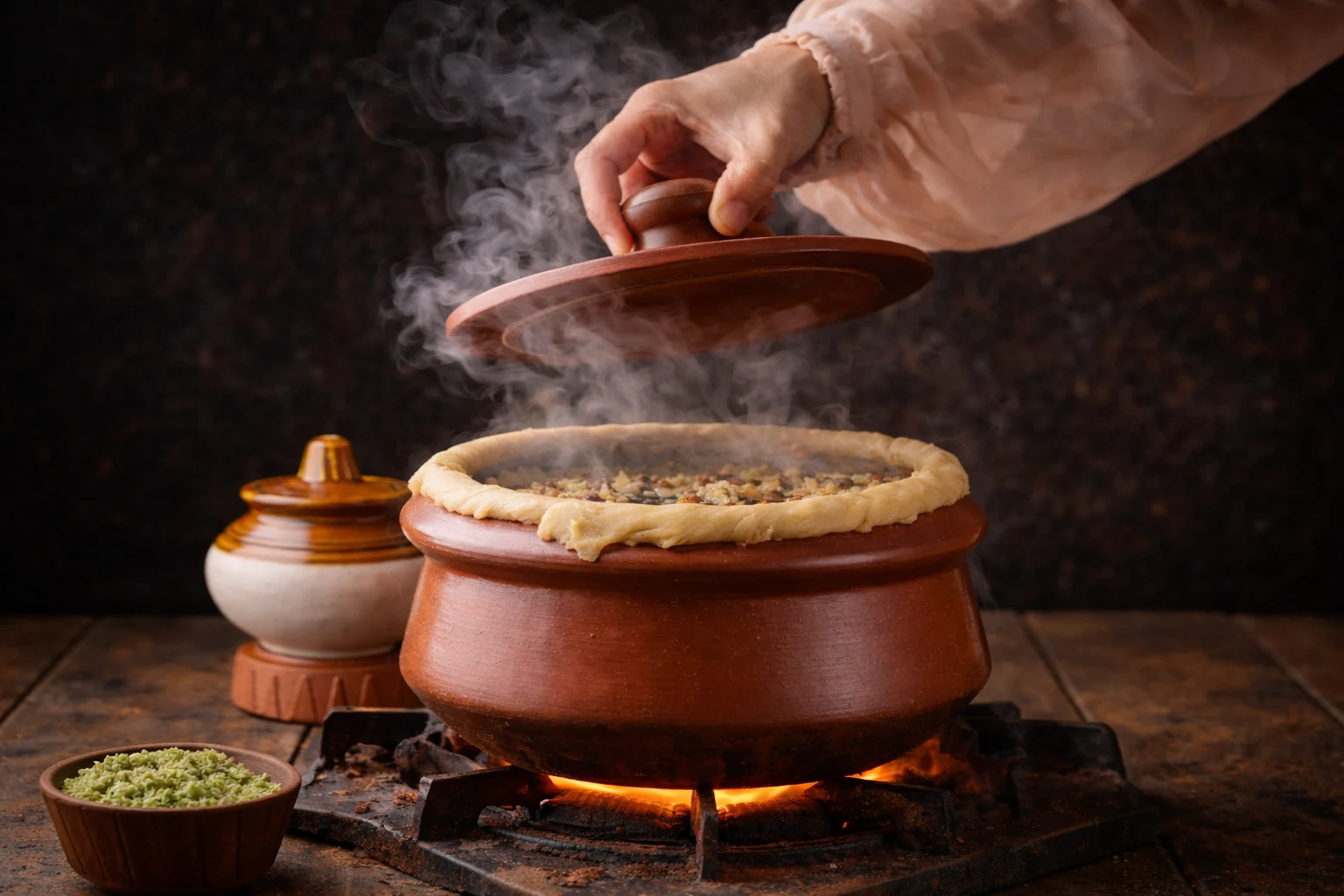
And few techniques represent that precision better than traditional dum cooking. If you’ve ever wondered why certain biryanis taste deeper, more integrated, and more aromatic than others, the answer often lies in dum. This centuries-old method is the backbone of what many consider truly authentic Indian flavor.
For diners exploring authentic Indian dining McKinney options, understanding dum cooking helps explain why some dishes stand apart. Let’s break it down clearly.
What Is Traditional Dum Cooking?
Dum cooking is a slow-cooking technique where food is sealed in a pot and cooked using trapped steam.
The word “dum” literally refers to breath — meaning the dish cooks in its own steam without external interference.
In traditional preparation:
- Ingredients are layered carefully
- The pot is sealed tightly (often with dough)
- Heat is applied gently
- Steam circulates internally
- Moisture and aroma remain locked inside
This method is foundational in biryani preparation and is central to delivering authentic Indian flavor.
Why Dum Cooking Matters in Indian Cuisine
Indian cooking relies heavily on spice layering.
Without proper technique, spices can taste separate or overpowering. Dum cooking solves that problem.
Here’s how:
1️⃣ Steam Circulation
The trapped steam moves evenly through the rice and protein, ensuring balanced infusion.
2️⃣ Moisture Retention
Nothing escapes. Aromatics remain inside the vessel.
3️⃣ Controlled Heat
Slow cooking prevents burning or over-drying.
4️⃣ Flavor Integration
Instead of sitting on the surface, spices integrate deeply into every grain of rice.
The result is not just spicy food — it’s cohesive flavor.
How Dum Cooking Preserves Authentic Indian Flavor
The preservation of flavor happens through structure, not excess.
Let’s examine the key components.
1️⃣ Sealed Environment = Aroma Protection
When biryani is dum-cooked properly:
- Essential oils from spices stay trapped
- Mint and coriander retain freshness
- Whole spices release gradually
- Steam redistributes flavor evenly
Because the pot is sealed, nothing evaporates prematurely.
This is why dum biryani often smells richer before you even take the first bite.
2️⃣ Layered Cooking Instead of Mixing
In traditional dum cooking:
- Rice is partially cooked separately
- Protein or vegetables are prepared with masala
- Layers are assembled intentionally
- Heat finishes the cooking process together
This layered structure ensures the rice absorbs flavor without becoming overcooked.
For those searching for dum biryani McKinney diners genuinely recommend, this layering technique is crucial.
3️⃣ Slow Heat Prevents Oil Overuse
One reason dum-cooked dishes feel balanced is because they do not rely on excessive oil.
Slow steam cooking allows:
- Spices to bloom naturally
- Meat juices to blend with masala
- Rice to absorb flavor without extra grease
This contributes to a dish that tastes rich but does not feel heavy.
Authenticity in Indian cooking is not about intensity alone — it’s about control.
Dum Cooking and Biryani: The Perfect Pairing
Biryani is where dum technique shines most clearly.
A properly dum-cooked biryani should have:
- Separate rice grains
- Deep aroma
- Even spice distribution
- Moist yet structured texture
Without dum, biryani risks becoming:
- Overmixed
- Unevenly spiced
- Greasy
- Dry at the bottom and under-seasoned at the top
That’s why traditional dum cooking remains essential in authentic Indian dining McKinney enthusiasts seek.
The Science Behind Dum Cooking
From a culinary science perspective, dum cooking works because of:
Controlled Steam Pressure
Trapped steam builds gentle pressure inside the pot, helping flavor molecules penetrate deeper.
Even Thermal Distribution
The sealed environment prevents temperature fluctuation.
Moisture Recycling
Steam condenses and falls back into the dish, preserving hydration.
This process allows authentic Indian flavor to develop without artificial enhancement.
Why Dum Cooking Takes Skill
It sounds simple — seal and cook.
But true dum cooking requires experience.
A cook must understand:
- Exact layering proportions
- Correct sealing technique
- Heat intensity control
- Cooking duration timing
- Rice-water balance
Even slight miscalculations can affect texture or moisture levels.
This is why dum biryani McKinney diners consistently praise often comes from kitchens that prioritize tradition over speed.
Where to Experience Traditional Dum Cooking in McKinney
For those exploring authentic Indian dining McKinney residents recommend, one place consistently maintains dum tradition:
Salem RR Biryani
At Salem RR Biryani, dum cooking is not adapted for convenience. It is preserved intentionally.
Diners often notice:
- Balanced spice infusion
- Moist rice without oiliness
- Deep aroma upon serving
- Consistency across visits
That consistency reflects proper dum execution.
Dum Cooking Beyond Biryani
While biryani is the most recognized dum dish, the technique applies to:
- Certain rice-based meals
- Layered vegetable dishes
- Traditional meat curries
In each case, dum cooking:
- Integrates flavor
- Prevents surface-level spice
- Enhances texture balance
It transforms cooking into controlled infusion rather than rapid sautéing.
How Dum Cooking Elevates the Dining Experience
When you sit down for authentic Indian dining McKinney offers and the dish is dum-cooked, you notice differences immediately:
- Aroma rises naturally
- Rice grains remain distinct
- Spice feels layered, not sharp
- Texture feels intentional
The meal feels complete rather than assembled.
That distinction matters.
It’s what separates ordinary rice dishes from truly authentic Indian flavor.
Signs of Properly Cooked Dum Biryani
If you want to evaluate quality, look for these indicators:
✔ Steam release when opened
✔ Balanced moisture — not dry, not oily
✔ No uneven spice pockets
✔ Tender meat integrated with rice
✔ Aroma that feels warm and layered
These are hallmarks of traditional dum cooking done correctly.
Why Dum Cooking Matters in Modern Indian Dining
In fast-paced restaurant environments, shortcuts are tempting.
But dum cooking resists shortcuts.
It requires:
- Time
- Attention
- Technique
- Patience
For diners seeking dum biryani McKinney options that feel authentic rather than rushed, this method remains essential.
As culinary awareness grows, more diners recognize the difference between quick rice preparation and properly dum-sealed cooking.
Frequently Asked Questions
What is traditional dum cooking?
Traditional dum cooking is a sealed slow-cooking technique where ingredients cook in their own steam, allowing deep flavor integration and moisture retention.
Why does dum cooking preserve authentic Indian flavor?
Because the sealed environment prevents aroma loss and ensures even spice infusion without relying on excessive oil.
Is dum cooking used in all biryanis?
Authentic biryani preparation traditionally uses dum technique, though some fast methods may skip proper sealing.
Where can I try authentic dum biryani in McKinney?
Salem RR Biryani in McKinney is known for maintaining traditional dum cooking techniques in its biryani preparation.
The Timeless Value of Dum Cooking
Culinary techniques endure for a reason.
Traditional dum cooking has survived centuries because it works.
It protects:
- Aroma
- Moisture
- Spice structure
- Texture integrity
It turns layered ingredients into unified flavor.
For anyone seeking authentic Indian dining McKinney residents genuinely appreciate, understanding dum cooking explains why certain dishes taste deeper and more complete.
When done correctly, dum cooking doesn’t just preserve flavor — it preserves tradition.