
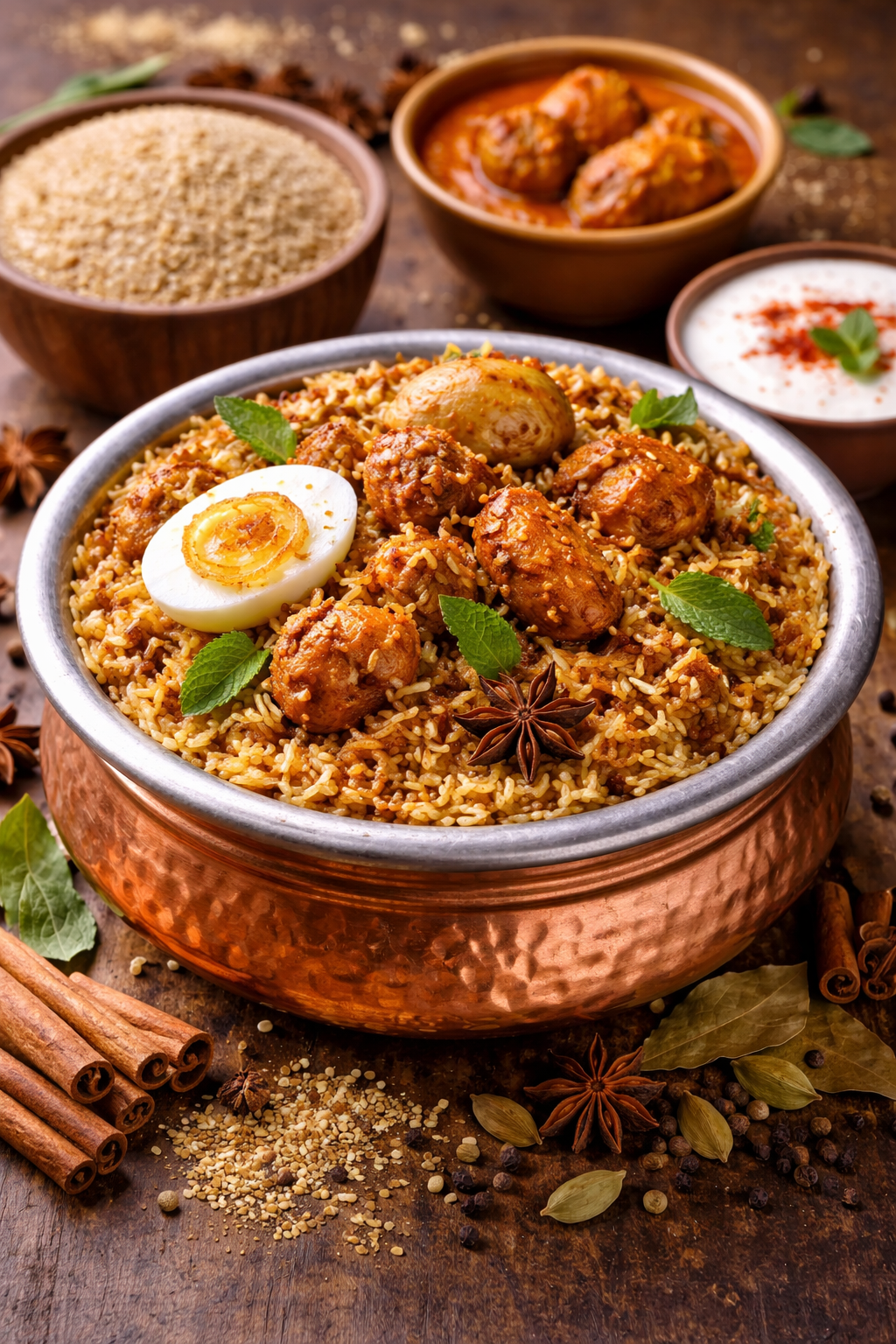
Long before the biryani reaches the table, its character is already decided in the kitchen. The choice of rice determines how the spices settle, how the aroma rises from the pot, and how every spoonful feels when served. In many South Indian kitchens, chefs and home cooks alike reach for one particular variety when preparing traditional biryani Seeraga Samba rice.
Unlike long-grain rice varieties commonly used in many biryani recipes, this small, aromatic grain plays a different role. It absorbs spices more deeply and creates a richer blend of flavors throughout the dish. That is why dishes prepared with seeraga samba rice biryani have become synonymous with authentic Tamil-style cooking. For diners exploring authentic biryani in McKinney TX, this traditional rice variety continues to define what true South Indian biryani tastes like.
Table of Contents
- Why Seeraga Samba Rice is the Soul of South Indian Biryani
- What Makes This Traditional Rice Variety Unique
- The Difference Between Basmati and Seeraga Samba Rice
- How Seeraga Samba Rice Enhances Biryani Flavor
- The Role of Dum Cooking in Tamil-Style Biryani
- Experiencing Authentic Seeraga Samba Biryani in McKinney
- Frequently Asked Questions
Why Seeraga Samba Rice is the Soul of South Indian Biryani
Seeraga Samba rice is widely used in traditional Tamil biryani because its small grains absorb spices more effectively, creating a deeper and more balanced flavor throughout the dish.
This rice variety has been used for generations in southern India, especially in regions known for distinctive biryani preparations. Its name comes from its shape—tiny grains resembling cumin seeds, which is why it is often associated with seeraga samba biryani rice recipes.
In South Indian cooking traditions, the choice of rice is just as important as the spices used. When preparing south indian biryani rice, cooks rely on Seeraga Samba because it integrates seamlessly with the ingredients.
Some qualities that make it ideal for biryani include:
- strong ability to absorb spice flavors
- naturally aromatic grains
- light texture when cooked
- compatibility with dum cooking methods
These characteristics make it one of the best rice for authentic south indian biryani.
What Makes This Traditional Rice Variety Unique
Every rice variety behaves differently during cooking. Some remain firm and separate, while others soften and absorb the surrounding ingredients.
Seeraga Samba stands out because of its ability to soak up flavor while still maintaining its structure.
Small Grain with Big Flavor
Unlike longer rice varieties, Seeraga Samba has short, compact grains. This allows the rice to mix evenly with spices, meat, and herbs during cooking.
When used in authentic south indian biryani, the rice becomes infused with the marinade and spice mixture rather than sitting separately in the dish.
Natural Aroma
Another defining feature is its aroma. When cooked slowly with spices, the rice releases a subtle fragrance that enhances the overall biryani experience.
Because of this quality, it is often considered an aromatic rice for biryani in Tamil-style cooking.
Cultural Heritage
Seeraga Samba has been used in traditional recipes for centuries. In many parts of Tamil Nadu, it remains the preferred rice for special dishes and festive meals.
Its long history is one reason it is regarded as a traditional biryani rice variety.
The Difference Between Basmati and Seeraga Samba Rice
Many diners wonder about the difference between basmati and seeraga samba rice, especially when trying different biryani styles.
Both rice varieties produce excellent dishes, but they create very different textures and flavor experiences.
Grain Structure
Basmati rice is known for its long, slender grains that remain separate when cooked.
Seeraga Samba, on the other hand, has smaller grains that blend more closely with the spices and ingredients.
Flavor Absorption
Because of its compact structure, Seeraga Samba absorbs marinades and spices more thoroughly. This is one reason it is commonly chosen for tamil style biryani rice preparations.
Overall Texture
Biryani prepared with basmati tends to feel lighter and more separated, while seeraga samba biryani rice produces a richer and more integrated dish where every bite carries the flavor of the spices.
How Seeraga Samba Rice Enhances Biryani Flavor
The most noticeable difference when using Seeraga Samba is the way it enhances the flavor profile of the biryani.
Instead of the rice and spices existing as separate elements, they combine into a cohesive dish.
Spice Absorption
During cooking, the rice absorbs the marinade, herbs, and spices used in the dish. This creates a layered flavor that builds gradually with each bite.
This characteristic explains why seeraga samba rice is best for biryani.
Balanced Texture
The small grains cook evenly and remain soft without becoming mushy. This balance allows the biryani to feel both rich and light at the same time.
Authentic South Indian Character
Because of these qualities, many chefs consider Seeraga Samba essential for preparing authentic south indian biryani.
For anyone exploring why seeraga samba rice is used in biryani, the answer lies in its ability to carry flavor while maintaining texture.
The Role of Dum Cooking in Tamil-Style Biryani
Rice alone does not create great biryani—the cooking method also plays a major role.
Traditional biryani preparation often uses the dum cooking technique, where the dish is sealed and cooked slowly so the ingredients blend naturally.
How Dum Cooking Works
The process typically includes:
- Marinating meat or vegetables with spices.
- Partially cooking the rice separately.
- Layering the rice and marinated ingredients.
- Sealing the pot and cooking slowly.
This method allows steam to circulate within the pot, helping the rice absorb the flavors evenly.
Because Seeraga Samba grains absorb seasoning effectively, they work exceptionally well with the indian biryani cooking method used in dum preparation.
The result is a deeply flavorful dish that reflects traditional cooking techniques.
Experiencing Authentic Seeraga Samba Biryani in McKinney
Across North Texas, the appreciation for regional Indian cuisine continues to grow. Diners looking for authentic biryani in McKinney TX often search for restaurants that prepare their dishes using traditional ingredients and techniques.
Several Indian biryani restaurant McKinney establishments focus on regional South Indian recipes that highlight the use of Seeraga Samba rice.
Food enthusiasts exploring south indian biryani McKinney Texas typically look for places that emphasize:
- traditional dum cooking
- authentic spice blends
- regional Tamil biryani preparation
These restaurants help preserve the authentic flavor of traditional biryani McKinney TX diners enjoy today.
What Makes Seeraga Samba Rice Special for Biryani?
Seeraga Samba rice stands out because it transforms how the biryani tastes.
Instead of acting as a neutral base, the rice becomes an active part of the flavor. Each grain carries the aroma of spices and herbs, creating a deeper and more cohesive dish.
This is why many chefs consider it the best rice for authentic south indian biryani.
A Rice That Defines Authentic Biryani
In biryani preparation, every ingredient matters—but the rice often shapes the entire dish. Seeraga Samba rice brings together aroma, texture, and spice absorption in a way that few other varieties can achieve.
For diners exploring authentic biryani in McKinney TX, understanding the role of this traditional rice reveals why Tamil-style biryani has such a distinctive taste. When prepared with care and slow cooking techniques, Seeraga Samba rice transforms biryani from a simple rice dish into a deeply flavorful culinary tradition. her varieties can achieve.
Frequently Asked Questions
What is Seeraga Samba rice used for?
Seeraga Samba rice is commonly used in traditional South Indian dishes, especially biryani. Its small aromatic grains absorb spices well, making it ideal for recipes that rely on slow cooking and layered flavors.
Why is Seeraga Samba rice good for biryani?
Seeraga Samba rice is excellent for biryani because it absorbs marinades and spices more effectively than many other rice varieties. This allows every grain to carry flavor, creating a more balanced and aromatic dish.
Is Seeraga Samba rice better than basmati for biryani?
Both rice varieties work well for biryani, but they produce different results. Basmati creates a lighter texture, while Seeraga Samba offers deeper flavor absorption, which is why it is often preferred for Tamil-style biryani.
What makes South Indian biryani different?
South Indian biryani typically uses regional rice varieties such as Seeraga Samba and emphasizes layered spices and dum cooking techniques. These elements create a richer and more aromatic flavor profile.
Where can I eat authentic Seeraga Samba biryani in McKinney TX?
Several restaurants in McKinney and the surrounding North Texas area specialize in South Indian cuisine and serve biryani prepared with Seeraga Samba rice using traditional cooking methods.