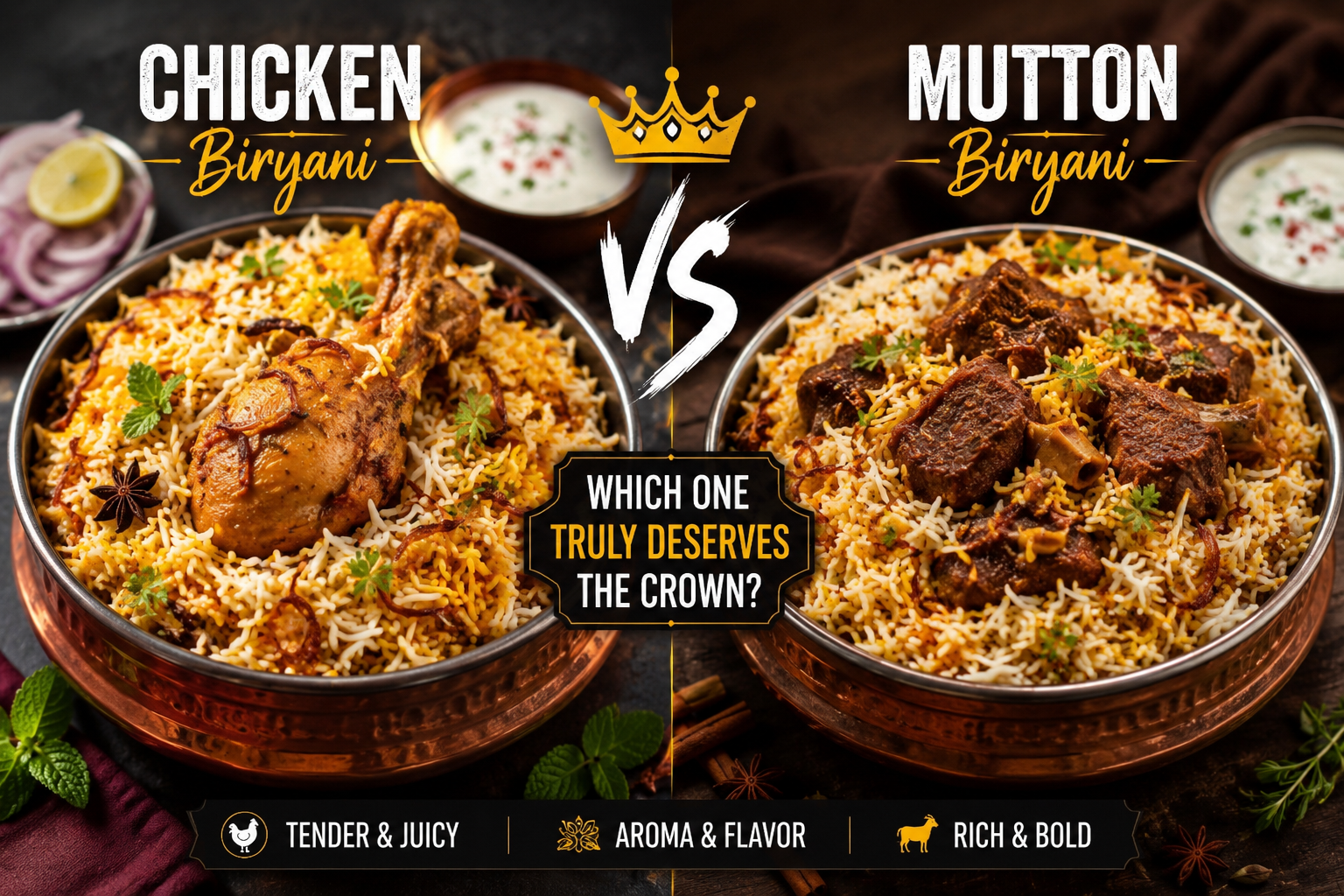
Close your eyes and imagine this: a heavy-bottomed pot sealed with dough, steam escaping from its edges, the entire kitchen swallowed by the heady perfume of saffron, whole spices, and slow-cooked meat. Before the lid is even lifted, your mouth is already making up its mind. But then comes the real question is the biryani inside made with chicken or mutton?
This is not just a food question. It is a rivalry older than most food debates in South Asian cuisine. At every wedding buffet, every Friday family lunch, and every late-night dhaba table, the argument rages on: which biryani is better chicken or mutton? Both have fierce loyalists. Both have earned their place at the table. But only one can satisfy the specific hunger you’re feeling right now.
Whether you are searching for the best biryani near me or trying to decide what to cook this weekend, this deep-dive comparison of chicken biryani vs mutton biryani will help you choose with confidence and appetite.
Table of Contents
1. The Biryani Legacy A Dish That Conquered Cultures
2. The Moment You Open the Pot Aroma & First Impressions
3. Head-to-Head Comparison Table
4. The Flavor Journey How Each Biryani Tells Its Story
5. Texture, Tenderness & That Perfect Bite
6. Cooking Time, Skill & Kitchen Patience
7. Nutrition & Health: Which Biryani Is Better for You?
8. When to Choose Chicken Biryani
9. When Mutton Biryani Is the Only Answer
10. Regional Styles That Changed the Biryani Game
11. Frequently Asked Questions
12. The Verdict And Why Both Win
1. The Biryani Legacy A Dish That Conquered Cultures
Biryani arrived in the Indian subcontinent through Persian and Mughal trade routes, evolving from pilaf-style rice dishes into the layered, slow-cooked masterpiece it is today. Over centuries, every region gave it a new identity Hyderabad gave it dum, Lucknow gave it finesse, Kolkata gave it potatoes, and coastal India gave it spice depth.
Both chicken and mutton were embraced as the protein of choice depending on geography, availability, and occasion. Mutton biryani was originally associated with royal feasts and celebrations, while chicken biryani became the everyday warrior accessible, fast, and deeply satisfying. Understanding this history makes eating biryani feel like tasting history itself.
2. The Moment You Open the Pot Aroma & First Impressions
The first test of any biryani is its fragrance. Lift the lid, and the steam that hits your face tells the whole story before a single grain of rice reaches your tongue.
Chicken Biryani Clean, Bright & Inviting
Chicken biryani announces itself with a lighter, more aromatic fragrance. The top notes are vivid you detect star anise, bay leaf, and the delicate sweetness of caramelized onions almost immediately. The scent is bright and welcoming. It does not overwhelm; it invites. The saffron milk pooled on top catches the light, golden and promising.
Mutton Biryani Deep, Smoky & Commanding
Mutton biryani hits differently. The moment that sealed vessel opens, a denser, earthier cloud of aroma fills the room. There is something almost primal about it the deep maillard-browned meat, the fat rendered into the rice, the bold warmth of black cardamom and mace. It does not just invite you in. It demands your attention.
3. Head-to-Head Comparison Table
| Factor | 🍗 Chicken Biryani | 🥩 Mutton Biryani |
| Cook Time | 45 – 60 minutes | 90 – 120 minutes |
| Flavor Profile | Light, delicate, spiced | Rich, bold, earthy |
| Texture | Tender, soft pieces | Juicy, fall-off-bone |
| Calorie Count | ~350–400 kcal/serving | ~450–500 kcal/serving |
| Price Point | Budget-friendly | Premium |
| Best For | Quick weekday meals | Celebrations & feasts |
| Spice Absorption | Moderate | Deep & intense |
| Beginner-Friendly? | ✅ Yes | ⚠️ Needs patience |
Featured Answer: Chicken Biryani vs Mutton Biryani Quick Summary
Chicken biryani is lighter, cooks faster (under 1 hour), costs less, and suits everyday meals. Mutton biryani is richer, requires slow cooking (up to 2 hours), is more expensive, and is best for celebrations and indulgent dining. Both are beloved across South Asia the right choice depends on your time, budget, and mood.
4. The Flavor Journey How Each Biryani Tells Its Story
Flavor in biryani is never just about the protein. It is about how the meat interacts with the spices, the rice, and the slow heat of the dum process over time.
What Makes Chicken Biryani’s Flavor Unique
Chicken has a neutral, almost canvas-like quality. It absorbs whatever is layered on it the marinade of yogurt and green chili, the crunch of fried onions (birista), the warmth of whole garam masala. Because chicken cooks fast, the flavors remain vibrant and distinct. Each bite delivers a clean, well-defined spice hit.
- Flavor: Bright, aromatic, spice-forward with a gentle savory base
- Aftertaste: Clean finish with residual warmth from cardamom and clove
- Best spice pairing: Coriander, mint, lemon zest, green chili
What Makes Mutton Biryani’s Flavor Unforgettable
Mutton is a bold, opinionated protein. Its natural fat and collagen melt into the rice during the long dum cook, creating a self-basting process that no chicken piece can replicate. The result is rice grains that are individually coated with meat essence no forkful is neutral. Every grain has a story.
- Flavor: Deep, layered, umami-rich with gamey undertones
- Aftertaste: Long, warming finish with lingering fat-spice fusion
- Best spice pairing: Kewra water, mace, black cardamom, charred onion
5. Texture, Tenderness & That Perfect Bite
Texture separates a good biryani from a great one. The rice should be separate yet moist; the meat should yield without disintegrating.
Perfectly cooked chicken in biryani is tender and juicy slicing through it with a spoon should meet minimal resistance. Bone-in pieces (thighs, drumsticks) deliver the most flavor and retain moisture best through the dum process. Overcooked chicken turns stringy, which is why timing is critical.
Mutton, especially bone-in cuts like shoulder or shank, becomes fall-off-the-bone tender after long, slow cooking. The marrow inside the bone slowly seeps into the surrounding rice, creating pockets of extraordinary richness. Biting through a slow-cooked mutton piece in biryani is one of the most texturally satisfying moments in Indian cuisine.
6. Cooking Time, Skill & Kitchen Patience
How Long Does It Take to Cook Biryani?
Chicken biryani takes approximately 45–60 minutes from marination to serving. Mutton biryani requires a minimum of 90–120 minutes, with some traditional recipes calling for overnight marination and a slow 2-hour dum cook. For best results, both should rest 15 minutes before opening.
This difference in cook time is not merely a scheduling issue it fundamentally affects the final dish. Chicken biryani rewards the weekday cook who needs something spectacular without spending an entire afternoon in the kitchen. Mutton biryani is a weekend project, a Sunday ritual, a dish you commit to.
7. Nutrition & Health: Which Biryani Is Better for You?
Both biryanis are rich, indulgent dishes and neither is a ‘diet food’ in the conventional sense. But there are meaningful nutritional differences worth knowing.
- Chicken biryani (per serving): ~350–400 kcal, 28–32g protein, lower saturated fat
- Mutton biryani (per serving): ~450–500 kcal, 30–35g protein, higher saturated fat
- Chicken is leaner, making it the better choice for calorie-conscious eaters
- Mutton provides iron, zinc, and B12 in higher concentrations
- Both dishes contain significant carbohydrates from basmati rice
From a pure protein quality standpoint, both are excellent. If you are managing cholesterol or maintaining a lower-fat diet, chicken biryani is the smarter everyday choice. If you are looking for nutrient density and do not mind the extra calories on a special occasion, mutton biryani delivers.
8. When to Choose Chicken Biryani
Chicken biryani is the right call in these situations:
- It is a weeknight dinner and you have under an hour
- You are cooking for a mixed crowd that includes people who avoid red meat
- Budget matters — chicken is significantly cheaper per kilogram
- You want a lighter, less heavy meal
- First-time biryani cooks will find chicken much more forgiving
- You are ordering biryani near me and want the most consistently executed dish
9. When Mutton Biryani Is the Only Answer
There are moments when only mutton biryani will do:
- A wedding, Eid celebration, or festive family gathering
- A Sunday afternoon when time and indulgence are both available
- You want to impress guests who know their biryani
- Cold weather calls for something rich and deeply warming
- You have been dreaming of that specific depth of flavor all week
- The occasion deserves something extraordinary
10. Regional Styles That Changed the Biryani Game
Across the Indian subcontinent, biryani has taken on local identities that give both chicken and mutton versions their own distinct character:
- Hyderabadi Biryani: Famous for its raw-meat dum style; mutton version is considered the gold standard
- Lucknowi (Awadhi) Biryani: Pukki (pre-cooked meat) style; both chicken and mutton versions are delicate and aromatic
- Kolkata Biryani: Uses potatoes alongside meat; chicken version has a devoted following
- Dindigul Biryani (Tamil Nadu): Uses seeraga samba rice; chicken version is intensely spiced
- Malabar Biryani (Kerala): Cooked with jeerakasala rice; chicken and mutton versions are equally celebrated
- Sindhi Biryani (Pakistan): Tangy and bold with plums and yogurt; mutton is traditional
11. Frequently Asked Questions
Q1: Which is more popular chicken biryani or mutton biryani?
Chicken biryani is more widely consumed globally due to lower cost, faster cooking time, and wider dietary acceptance. However, mutton biryani holds a higher prestige factor and is the preferred choice for celebrations and festive gatherings across South Asia and the Middle East.
Q2: Which biryani has more flavor chicken or mutton?
Mutton biryani generally delivers a deeper, more complex flavor profile because mutton fat and collagen melt into the rice during the long dum cooking process. However, chicken biryani offers brighter, more aromatic flavors that are equally satisfying. Flavor preference is ultimately subjective and depends on the cook’s skill.
Q3: Is chicken biryani easier to cook than mutton biryani?
Yes. Chicken biryani is significantly more beginner-friendly. Chicken cooks through in 20–25 minutes, making the overall process faster and less error-prone. Mutton requires a much longer cooking time and benefits from overnight marination, making it more suited to experienced cooks or weekend cooking sessions.
Q4: Which biryani is healthier chicken or mutton?
Chicken biryani is lower in calories and saturated fat, making it the better everyday option for health-conscious eaters. Mutton biryani offers higher concentrations of iron, zinc, and vitamin B12. Both should be enjoyed in moderation as part of a balanced diet.
Q5: Can I substitute chicken for mutton in a biryani recipe?
Yes, but you will need to adjust cooking times and spice ratios. Chicken needs far less time than mutton. Using a chicken biryani recipe as the base and reducing dum cooking time to 20–25 minutes (versus 45–60 for mutton) will yield good results. The flavor depth will differ, but the dish will still be delicious.
Q6: Which biryani is best for large gatherings and catering?
Both work well for large-scale cooking, but chicken biryani is easier to scale and more budget-friendly for big events. Mutton biryani is the traditional choice for weddings, Eid feasts, and high-prestige events where the extra cost and effort are considered worthwhile.
12. The Verdict And Why Both Win
Here is the honest truth about the chicken biryani vs mutton biryani debate: there is no loser. These are two extraordinary expressions of the same culinary tradition, each perfect for different moments, different moods, and different appetites.
Choose chicken biryani when you want speed, ease, lighter flavors, and everyday satisfaction. Choose mutton biryani when you are ready to invest time, chase depth of flavor, and create a meal that people will talk about long after the last grain of rice is gone.
The best biryani is not always the most expensive or the most labor-intensive. The best biryani is the one that is made with attention, eaten with company, and remembered with warmth.
So which one are you making this weekend?